
To advance sustainable poverty reduction and ensure year-round income security for its members, the Jeevidam programme continues to invest in non-farming vocational skill development. By expanding livelihoods beyond agriculture into handicrafts, tailoring, and household production, Jeevidam is enabling families to generate supplemental income irrespective of crop cycles and seasonal uncertainties.
Across several locations, handicrafts and household production training have gained strong momentum. The Parangipettai Neithal Jeevidam 10K FPCL conducted specialized training in agarbathy (incense stick) making, while Vedasanthur Kalanjia Jeevidam integrated agarbathy and sudam (camphor) production into its institutional strengthening initiatives. To promote creative livelihoods among women members, Parangipettai also facilitated training in Aari work, a traditional embroidery skill with strong market potential. In Cuddalore district, local heritage foundations are exploring market linkages for member-produced goods such as incense (vathi), phenyl, and soap oil, further strengthening household-level enterprises.
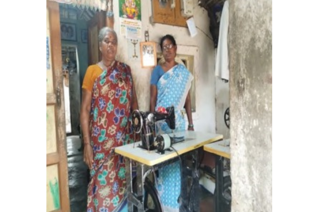
Tailoring has emerged as one of the most sought-after non-farm livelihood options, evolving from skill training into tangible business activity. In Parangipettai, tailoring machines were distributed to members from the Ramanathapuram and Suthukeani clusters, supporting immediate self-employment. At Vedasanthur, members themselves initiated demand for tailoring machine camps and livelihood sessions, reflecting strong grassroots ownership.
Notably, the Keerapalayam Neithal Jeevidam 10K FPCL successfully facilitated the sale of 15 tailoring machines to its members during the month, generating a transaction value of ₹1,11,400—a clear indicator of the growing economic viability of non-farm enterprises.
These initiatives underscore Jeevidam’s commitment to building diversified, resilient livelihoods that empower households, especially women, to achieve financial stability beyond farming.
